
Back To Routine: Setting a Movement Schedule at Home
As late summer arrives in August, there is a distinct shift in the air. Families prepare for the upcoming school year, seasonal schedules shift, and the relaxed pace of mid-summer gives way to structure. This seasonal transition makes August the ideal opportunity to reset, recalibrate, and establish a consistent, structured home exercise routine.
For anyone managing chronic conditions, working through rehabilitation, or seeking to maintain physical independence, consistency is the key to lasting success. While motivation can ebb and flow, a well-structured daily routine removes the guesswork, helping turn healthy movement into an effortless habit. Recovering and thriving at home gives you full control over your environment—making it easier than ever to build movement seamlessly into your day.

Why Routine Matters for Physical Recovery
Establishing a predictable movement schedule does far more than keep you organized; it directly impacts how your body heals and adapts.
- Muscle Memory & Habit Formation: Repeating specific movements at similar times each day reinforces neuromuscular pathways, making balance and mobility exercises feel more natural over time.
- Managing Fatigue & Energy Levels: Breaking your exercises into small, scheduled blocks throughout the day prevents physical exhaustion while keeping stiffness at bay.
- Reduced Mental Friction: When movement is built into your daily schedule—just like brushing your teeth or eating breakfast—you no longer have to decide when or if you will exercise.
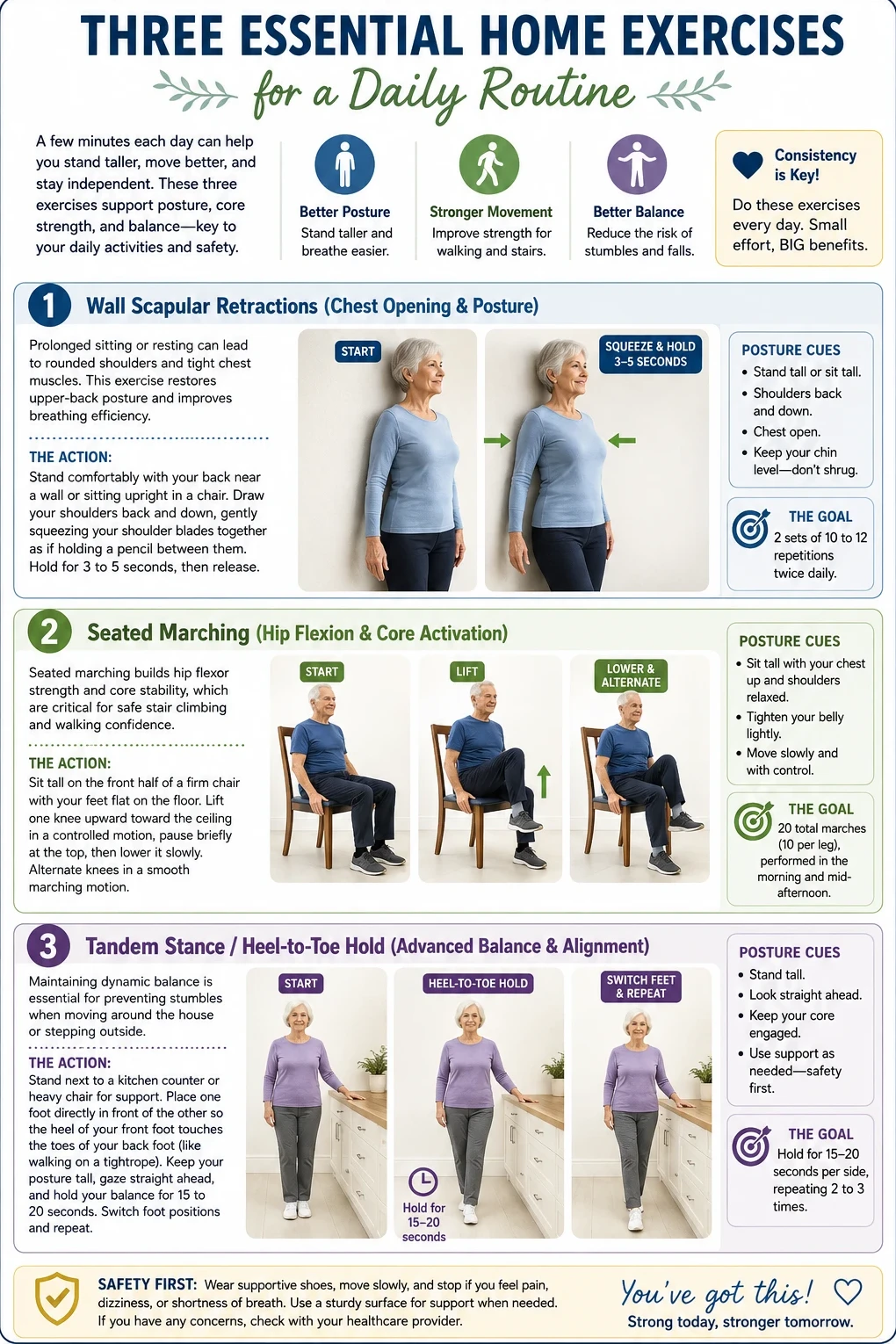
Three Essential Home Exercises for a Daily Routine
To help you anchor your new August schedule, here are three high-value exercises focused on posture, core strength, and lower-body stability. Refer to the image guide above for form and posture cues.
1. Wall Scapular Retractions (Chest Opening & Posture)
Prolonged sitting or resting can lead to rounded shoulders and tight chest muscles. This exercise restores upper-back posture and improves breathing efficiency.
- The Action: Stand comfortably with your back near a wall or sitting upright in a chair. Draw your shoulders back and down, gently squeezing your shoulder blades together as if holding a pencil between them. Hold for 3 to 5 seconds, then release.
- The Goal: 2 sets of 10 to 12 repetitions twice daily.
2. Seated Marching (Hip Flexion & Core Activation)
Seated marching builds hip flexor strength and core stability, which are critical for safe stair climbing and walking confidence.
- The Action: Sit tall on the front half of a firm chair with your feet flat on the floor. Lift one knee upward toward the ceiling in a controlled motion, pause briefly at the top, then lower it slowly. Alternate knees in a smooth marching motion.
- The Goal: 20 total marches (10 per leg), performed in the morning and mid-afternoon.
3. Tandem Stance / Heel-to-Toe Hold (Advanced Balance & Alignment)
Maintaining dynamic balance is essential for preventing stumbles when moving around the house or stepping outside.
- The Action: Stand next to a kitchen counter or heavy chair for support. Place one foot directly in front of the other so the heel of your front foot touches the toes of your back foot (like walking on a tightrope). Keep your posture tall, gaze straight ahead, and hold your balance for 15 to 20 seconds. Switch foot positions and repeat.
- The Goal: Hold for 15–20 seconds per side, repeating 2 to 3 times.

Practical Action Steps: Build Your August Schedule
A routine only works if it fits comfortably into your life. Use these actionable steps to set up a sustainable routine this month:
- Anchor Movement to Existing Daily Anchors: Pair exercises with regular habits. For example, perform your Wall Scapular Retractions right after making your morning coffee, or do your Seated Marching after lunch.
- Create a Dedicated “Movement Corner”: Designate a clean, safe spot in your home with a sturdy chair and clear floor space free of clutter or loose rugs. Having your space ready removes friction.
- Track Your Consistency: Place a visual tracker or simple wall calendar nearby. Put a checkmark on every day you complete your planned movement sessions. Watching your progress accumulate provides a powerful boost to your momentum.
Building a routine isn’t about perfection; it’s about steady, reliable progress in the comfort of your home. By taking control of your daily schedule this August, you lay a strong foundation for health, strength, and independence for the rest of the year.
Your therapy department, simplified.
Call Kinetic Therapy Service for all your home health therapy needs! 580-279-1928